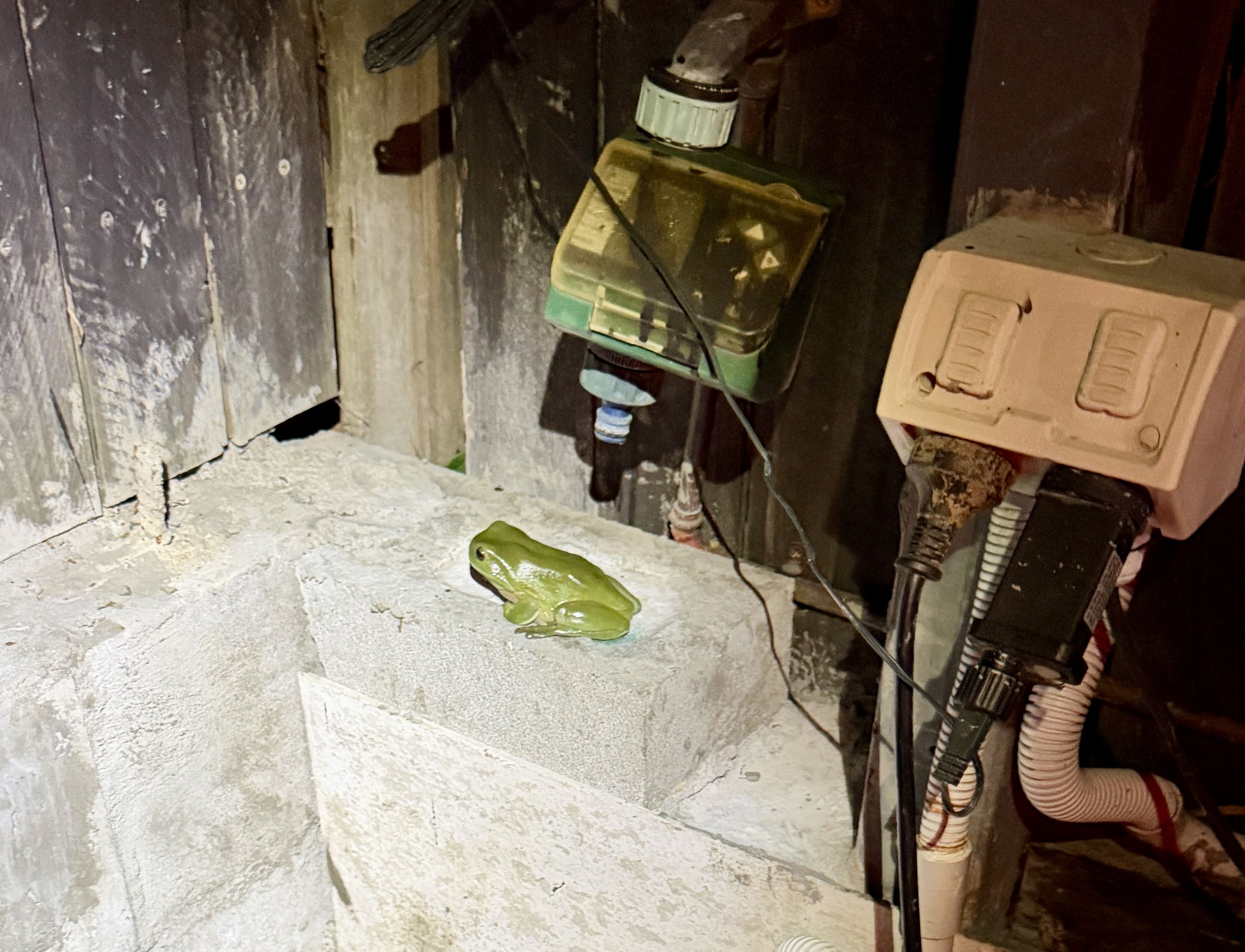
One of the most common calls we receive is from pet owners or homeowners who found something in their yard and are not sure whether it is a cane toad or a native frog. The two can look surprisingly similar, particularly at night, in a hurry, or when dealing with juvenile animals that have not yet reached full size.
Getting this wrong matters. Native frogs are protected wildlife. Cane toads are an invasive pest. They require completely different responses.
This guide gives you the practical information to tell them apart in Queensland conditions.
The Key Differences at a Glance
You do not need to be a wildlife expert to make a reliable identification. Focus on a small number of clear physical features.
Skin texture
This is the most reliable quick indicator.
Cane toads have noticeably dry, rough, heavily warty skin. The surface has a rough, bumpy texture that is visible even from a short distance.
Native frogs have smooth or finely textured skin that looks and is moist. Even species with some texture will appear smoother than a cane toad.
If the animal looks like it needs moisturiser, it is probably a cane toad.
The parotoid glands
Cane toads have large, prominent kidney-shaped glands behind each eye that extend down toward the shoulders. These are the organs that produce the milky toxin. They are raised, clearly defined, and look like a rounded ridge or lump sitting behind and below the eye.
Native frogs do not have these structures. They may have some texture near the head, but nothing resembling the defined, raised parotoid glands of a cane toad.
This is the most definitive single feature to look for.
Body shape and posture
Cane toads sit in an upright, hunched position with the body raised. They tend to look heavy and rounded from the side. Their hind legs are shorter relative to body size compared to most native frogs.
Native frogs typically sit lower to the ground with legs tucked to the sides, giving a flatter profile. Many native frog species are slender and longer-limbed relative to their body.
Colour
Colour alone is not reliable for identification — both cane toads and native frogs vary widely depending on environment, age, and individual variation. Cane toads range from grey-brown to olive and yellow-brown. Native frogs span an even wider range.
Do not make a decision based on colour.
Movement
Cane toads walk or shuffle rather than hop. Their movement is slower and more deliberate. When alarmed, they may make short hops but they do not have the explosive jumping ability of most native frogs.
Native frogs are generally quicker and springier. Many native species will take long, rapid hops when disturbed.
Common Native Frogs That Can Be Confused With Cane Toads
A few Queensland native species are more commonly mistaken for cane toads than others.
Giant barred frog (Mixophyes fasciolatus) — large, found near rainforest creeks. The size can be surprising, but skin texture and parotoid glands will distinguish it.
Broad-palmed rocketfrog (Litoria latopalmata) — medium-sized, dry-adapted species with slightly textured skin. Smoother than a cane toad and no parotoid glands.
Striped marsh frog (Limnodynastes peronii) — extremely common in South East Queensland and one of the frogs most often confused with juvenile cane toads at night. It is stockier than many native frogs. Look closely at the skin texture and the absence of parotoid glands.
In all cases: if uncertain, do not touch.
Juvenile Cane Toads
Juvenile cane toads — small toadlets that have recently emerged from water — are the hardest to identify. They can be as small as 1cm and lack the pronounced features of adults. At this size, many native frog juveniles also look similar.
Key things to check on juveniles:
- Early parotoid development — even small cane toads often show the ridge behind the eye
- Skin texture — still dryer and wartier than native frog juveniles of comparable size
- Movement — juvenile toads shuffle; juvenile frogs spring
If you are finding large numbers of very small toadlets after rain, they are most likely cane toads — mass emergence events of this kind are a characteristic of cane toad breeding.
What to Do When You Find One
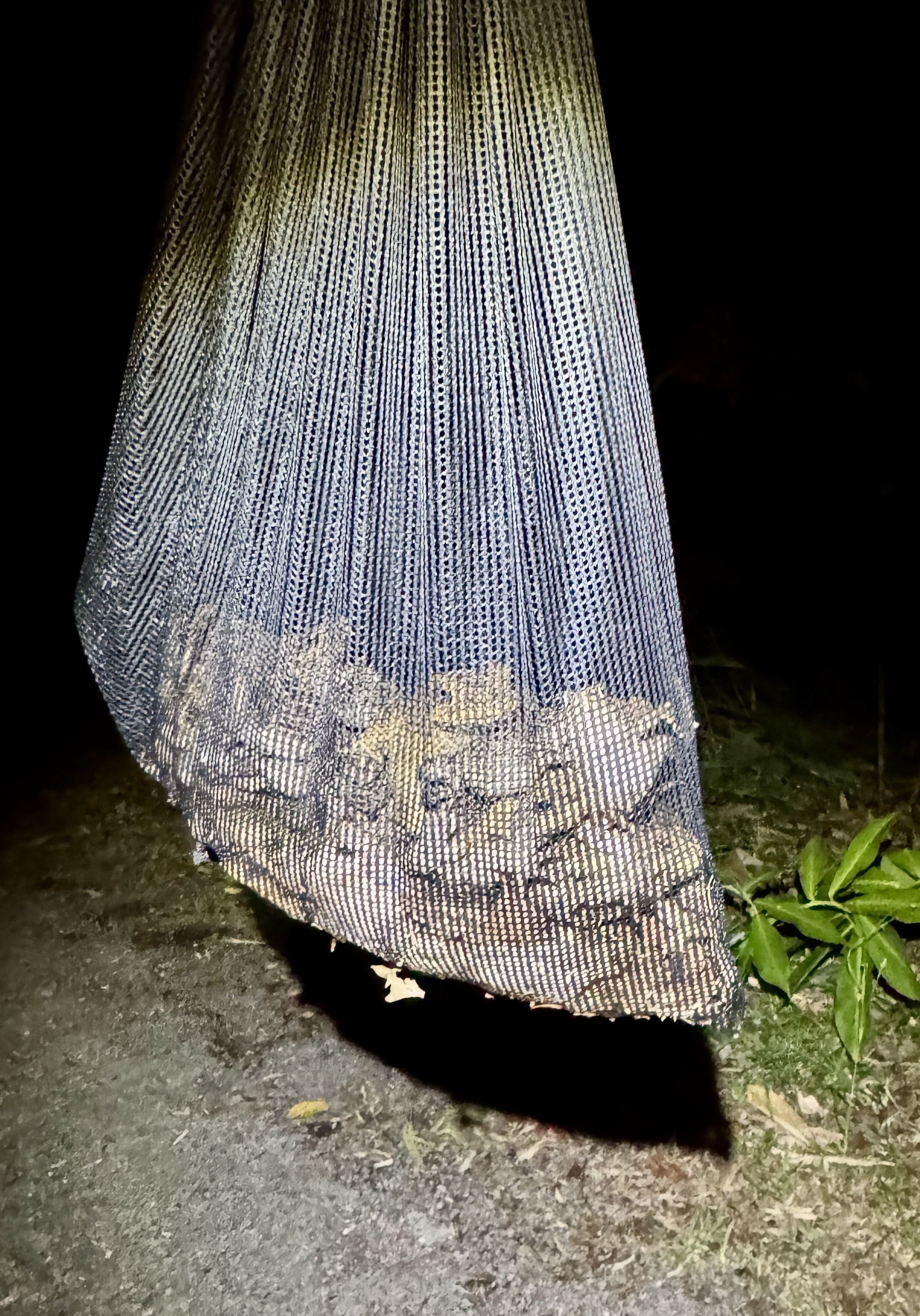
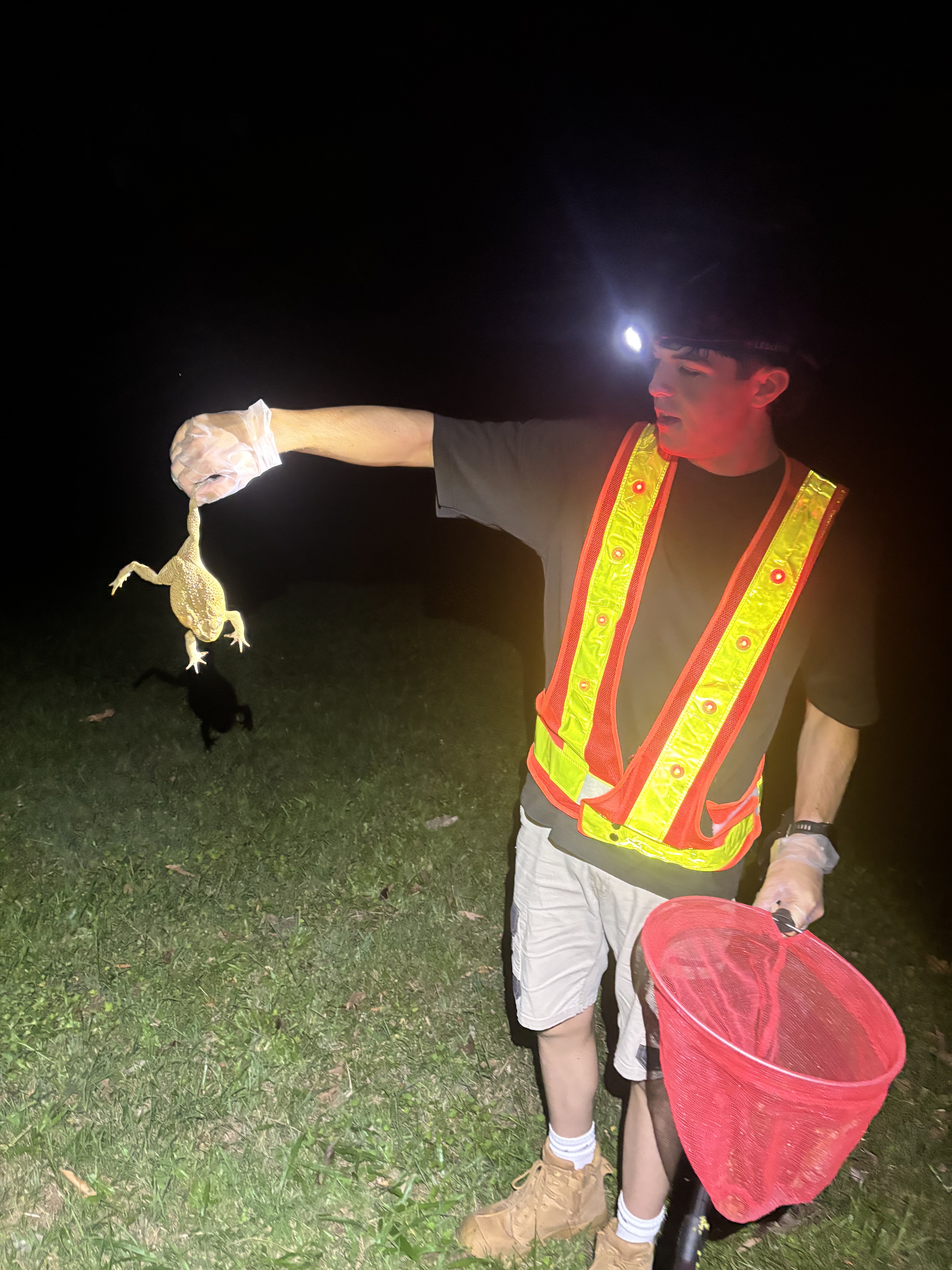
If you are confident it is a cane toad: Remove it wearing thick rubber gloves. Dispose of it humanely — placing it in a sealed bag in the freezer is currently considered the most humane method per RSPCA guidelines. Do not touch it bare-handed and keep it away from your eyes and any open skin.
If you are not sure: Leave it alone. Photograph it from a distance. You can use the Queensland Government's FrogID app or contact Watergum for identification assistance. Never take a guess and handle an unknown animal.
If you have pets in the area: Bring them inside while you deal with the situation. Any uncertainty should default to caution.
Why Getting This Right Matters
Misidentifying a native frog as a cane toad and removing it is not a minor mistake. Native frogs play an essential role in Queensland's ecosystems and are in decline in many areas. Many are legally protected.
Misidentifying a cane toad as a native frog and leaving it in your yard is equally problematic — particularly if you have pets.
Take thirty seconds to confirm before you act.
If you need help identifying or managing cane toads on your property, get in touch. We also partner with Watergum on species identification and work to ensure only cane toads are removed — never native wildlife.